Showing posts with label question. Show all posts

Tuesday, 29 November 2011

Questions I missed: Solubility of our powdered ingredients

In this post, Lalla writes: If the solubility is 0.5% at 25°C, does it mean if we dissolve a higher concentration at say 35°C the allantoin will crystallize as it cools down? If I try to dissolve MSM and allantoin and caffeine in water, will their respective solubility decrease because of the other ingredients?

Solubility is generally measured at STP, which is standard temperature and pressure. The official IUPAC STP is 0˚C and 100 kPa (the pressure at sea level. We generally use SATP or standard ambient temperature and pressure, which is considered to be 25˚C or 77˚F and 100 kPa (sea level).

If something has a solubility of 0.5% at SATP, this means at 25˚C you can dissolve 0.5 grams of it in 100 grams of solvent (alcohol, water, oil, and so on). So let's say you have something like green tea extract and its solubility is 0.5% at SATP, this means that I should be able to dissolve 0.5 grams of green tea extract in 100 grams of water at 25˚C. If it cools down below 25˚C, the solubility might go down slightly, but not enough that we have to worry about it!

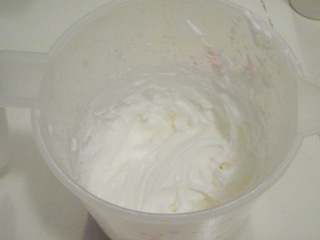
When we increase the temperature, we generally increase the solubility of the ingredient, so we can dissolve more of it. I can get far too much powdered extract to dissolve in my toner when it's warm (45˚C or slightly lower), but it'll precipitate when it cools down (see the picture above). Which is why we want to make sure we always stay at the suggested usage rates!

One exception to this increase the temperature, increase the solubility is carbon dioxide in pop. When we cool it down, it gets more soluble, which is why a pop from the fridge feels fizzier than that from your shelf! Interesting, eh?

But the question Lalla asked is about how solutes affect other solutes. If you have something like allantoin (used at 0.5%) and you add a powder like MSM (up to 5%) and another powder like caffeine (not sure of percentage), what happens if you put them all together? In theory, water can only hold so much and you will reach a point when you can't put anything more into that water. It's not about the chemistry of the other ingredients - as long as allantoin and MSM don't combine to great nitroglycerin or something like that - but about how much the solvent can hold.

If you're making something like a toner, you'd be surprised at how much you can add before you get a precipitate! Water is a great solvent for things that like to be dissolved in water, and you could get quite a bit in there. I've made toners that contained a ton of things - 0.5% allantoin, 0.5% green tea extract, 0.5% chamomile extract, 0.5% grapeseed extract, 2% niacinamide, 2% MSM, 2% salicylic acid (what's that - 8% powder?) and they stayed nice and solubilized, and the product stayed liquid!

I will point out that this one looks kinda muddy, and it isn't going to be clear at any point in its lifetime because I've loaded it up with tons of great extracts and powders. But the question was whether the various powders would have an effect on the solubility of other powders, and the answer in general is no, they shouldn't if we're using things at suggested rates!

Here's a toner filled with tons of water soluble powders, and here's another!

Did I answer your question? Join me tomorrow for more fun with cosmetic chemistry!

Tuesday, 15 November 2011

Question: Can you use green tea powder in lotion bar recipes?

In this post, Aicha asks: I love matcha green tea powder! Can this be used in lotion bar recipes?

The short answer...no. The long answer...yes, but not the powder.

Green tea powder is a fantastic addition to our products (click here for the PDF on the topic!). It's full of catechins, anti-oxidants, caffeine, proanthocyanidins, and more, which are great for our skin! Green tea powder can be used at up to 0.5% in the cool down phase of our products - it's heat sensitive - and I like to keep a little warm water from the heated water phase to help it dissolve before adding (it's also water soluble). In our emulsified products, though, it can cause a redox reaction, which can cause all kinds of weird things to happen in our lotions, the main annoying one being separation. This doesn't always happen, but it can, and that's annoying.

This is when we turn to liquid green tea extract, which won't cause some of those problems. (Here's where I found it at The Personal Formulator, and here's an Ecocert version at Lotioncrafter.) Liquid green tea extract is water soluble - as is green tea powder - so it's a great addition to any product in which you might like to include green tea. I tend to use it at 5% in my cool down phase in place of the 0.5% powdered extract. Although the Personal Formulator picture shows a brown coloured liquid, the version I have is clear, so I like to use this in things like facial cleansers or toners, where clarity is an issue. (In this cleanser - which I've only just realized I haven't posted, so look for that in the next few days - I'm using a bunch of extracts that are very dark coloured. I don't mind, but your friends and family or customers might!)

But you can't include that in a lotion bar, facial serum, body oil spray, or in any other oil based product without an emulsifier. For that we need an oil soluble green tea extract, something I found at Brambleberry recently! The INCI is Capric Triglycerides, Camellia Sinesnsis Leaf Extract. We know the latter is green tea extract, but what the heck is capric triglycerides? It's a fraction of coconut oil (fractionated coconut oil has an INCI of caprylic/capric triglycerides), so it's a very light emollient, like fractionated coconut oil without the caprylic triglycerides. So what we have here is a very light oil with green tea extract in it. Brambleberry recommends its use at up to 6% and I'm going to suggest we reserve it for the cool down phase because green tea extract is heat sensitive.

Join me tomorrow for a few ideas on how to use oil soluble green tea in our products!

And note: I'm not affiliated with any supplier or manufacturer, so my links are suggestions for where I found the product. I pay for all my ingredients myself, unless otherwise noted! 

Question: Do you want to know more basic chemistry?

What do you think about having a post in which a basic concept in chemistry is explained every week? We could go over basic concepts in chemistry or I could answer questions or whatever you want. I'm thinking about things I've already covered like anionic, cationic, and non-ionic, solubility, miscibility, emulsification, and so on, but including things like redox reactions, acid-base reactiosn, and the like.

I realize I'm a science geek and I find these things interesting, but it is possible that you don't. Hence the question! Be honest! 

Monday, 14 November 2011

Where to get esters in the UK? and downloadable European suppliers' list

Eucalypta asks for help in this postNow I'm desperately searching for a supplier of esters in the EU. Would be thankful for a hint.

Can anyone help? Comment here!

And Eucalypta (aka Corry) has put together this wonderful downloadable list of suppliers in Europe, which will be perma-linked in the free downloadable PDFs section of the blog (right hand side of this page). It's awesome! Thanks!

Saturday, 12 November 2011

Optiphen revisited...

In this post and this post, sfs asks: Could Optiphen be used in an anhydrous product? Both Lotioncrafter and the Herbarie list it as a preservative for all types of products.

In this post, Sciarretta Farms said: Are you sure that all the preservatives in the Optiphen family are only for water soluble products? A lot of people use Optiphen to preserve their anhydrous scrubs.

Is Optiphen suitable for anhydrous creations?

I checked out the Herbarie's listing for Optiphen: Optiphen is suitable for anhydrous formulations and emulsions, such as creams, lotions, salves, body butters, and body scrubs.

I checked out Lotioncrafter's listing for Optiphen: Optiphen can be used in a wide variety of personal care products including aqueous and anhydrous systems and emulsions.

And I've checked out these brochures published by ISP, the makers of Optiphen...
ISP product guide (page 22) - nothing listed about being suitable for anhydrous products.
Preservative Data Sheet (page 12 or 22, not sure) - looks to be the same sheet, so that really doesn't help much.
Mild preservative data sheet (page 4) that says, "Optiphen® is applicable for use in a variety of personal care preparations such as aqueous and anhydrous systems, as well as emulsions."
And Preservation Breakthrough (page 7) that says, "

So there you have it. Apparently all the Optiphen products can be used in anhydrous formulations.

But wait...on page 4 of the mild preservation data sheet, the company writes this about Optiphen Plus...
"Optiphen® Plus can be used in a wide range of aqueous and emulsion-type personal care formulations, such as creams, lotions, shampoos, conditioners, mousses, and wet wipes." There's nothing about using it in anhydrous products. And on page 5 it says this about Optiphen ND..."Optiphen® ND/RokonsalTM ND has proven to be an effective preservative system for rinse-off products such as shampoos, shower gels, and foam baths. Optiphen® ND/RokonsalTM ND is recommended for use in creams, emulsions, lotions, and gels with acidic pH. Suitable for oil/water and water/oil emulsions."

I'm getting more confused by the minute! In the Preservation Breakthrough document quoted above, it states that ALL Optiphen products can be used effectively in "aqueous and anhydrous systems as well as emulsions". But then we see Optiphen Plus to be used in "aqueous and emulsion-type personal care formulations" and Optiphen ND suggested for "creams, emulsions, lotions, and gels with acidic pH". Hmm...

What do I think? When the company is putting out information that contradicts other information, I get confused and annoyed. With two references from the company and chemistry that backs it up, I think it's safe to say that Optiphen is suitable for anhydrous products - which makes sense because phenoxyethanol is soluble in both oil and water - but I can't say anything about the other Optiphen products.

As a note, I'm linking the three posts on Optiphen to this post, I'll update the PDF on preservatives with this information this weekend (time willing), and that's my final word on Optiphen. Unless I can get some definitive, non-contradictory information about this line of preservatives, I won't be commenting on anything relating to Optiphen in the future.

As a disclaimer: I use liquid Germall Plus, Germaben II, and Phenonip as my preservatives of choice. I haven't used Optiphen or any of the variations in my products and I'm not planning to do so, and part of that decision relates to the lack of good information about this ingredient. The other reasons including not finding it locally easily and not wanting it to curdle my lotions! 


EDITED TO ADD: I think I need to clarify my statement about Optiphen. I'm not knocking it and I'm not putting it down - I have no opinion on this preservative. I'm not going to be writing about it in the future unless I can find something really definitive from a source that I trust for fear that I'm spreading misinformation. I owe it to you, my wonderful readers, to be accurate, and I don't feel I have enough information about Optiphen to write anything further on it.

I can't use every single ingredient out there as I simply don't have the time and I can't afford to buy one of everything. I'm making my decision based upon my personal preference. Just as some people choose not to use silicones, some choose not to use parabens, and some choose to make organic products, I'm choosing not to include Optiphen in my workshop.

Friday, 11 November 2011

Question: Are you getting what you think you're getting when you buy ingredients?

In this post, Always Looking 4 1 More writes:
In regards to your comment, "If you see something like aloe vera, odds are really good that it's aloe vera liquid or extract, not the gel, because the gel doesn't get used all that often."

I've come to the conclusion that not much of what we find in the way of aloe vera is what is says it is in ANY form. Have you ever smelled the gel (often referred to as "meat, or "inner fillet") of an aloe vera plant. It retains its natural smell no matter what form it's in, when it is allowed to remain in its natural state, without anything else added to it or taken away from it. I've smelled it, felt it, and even licked it right off the leaf (yick!). I smashed it, blended it, and strained it so all that was left was just "juice" (hardly any slime at all). No matter what I've done to it, the natural smell remains.

So I wonder what the aloe vera products I see in the stores by various suppliers really are when they have no smell whatsoever-- yet they claim on the labels to be "natural", or some say "no preservatives and nothing added", etc. Maybe they're not adding anything to the original gel, but I guess what they're not saying is how they "take away" the smell. It's the "take away" part that they leave out :-/

This is one of the things that drives me crazy, and why I encourage everyone to ask questions of our suppliers and our manufacturers because the information they provide isn't always completely accurate. It could be that they don't know about an ingredient - I'm perpetually surprised when I ask a question about something like an emulsifier and the supplier can't offer me a suggested usage rate! - or the manufacturer hasn't provided them with completely accurate information. For every ingredient I use, I insist on having a data sheet, data bulletin, and - at the very least - the INCI name. (Click here and here for two posts on INCI names!)

I use aloe extract from Voyageur, which is listed as being "A 100% (1:1) concentrated Aloe Vera Liquid Extract in a glycerin and water base" and has an INCI of Aloe Barbensis Leaf Extract (and) Glycerin (and) Aqua. It doesn't claim to be aloe vera juice at 100% and it's easy for anyone wanting to buy the product to see what it is - it's an extract with glycerin and water. (I am a little worried about it not having a preservative listed, but I am sure there's one there lurking in the glycerin because I can have a bottle of this in my workshop for a few months after opening and not see any grosssness there!)

Compare this to what Lotioncrafter advertises as aloe vera juice 1x - it has an INCI of Aloe Barbadensis Juice and it's noted that it has a preservative (Sodium Benzoate, Sodium Sulfite, and Potassium Sorbate, Citric Acid as a pH adjuster). I have no idea how this smells, but it claims to be 100% aloe vera (well, 99.something and preservatives, which, to me, is better than 100% aloe vera juice) and I imagine it has a smell to it?

Or compare this to what you might find at Brambleberry. They have two products - aloe vera extract, which contains water, glycerin, Aloe Barbadensis Leaf Extract, citric acid, potassium sorbate, sodium benzoate and aloe vera juice, which contains Aloe Barbadensis (Aloe) Leaf Juice with nothing else listed.

I bought some aloe vera - listed as natural and pure - from Wal-mart. That stuff smelled really strong in the bottle, but not in my products, and it went bad in about two weeks. I guess they were telling the truth about the not having preservatives part, but they failed to tell me about the putting it in the fridge part. It had a layer of black/brown mould on the bottom of the bottle with bits floating in it! Ewwww!

We're seeing a lot of aloe vera based drinks reaching our stores, and I imagine they must only use a titch of it or they've found a way to deodorize it!

Having said all of this, we have an aloe vera plant in my house and I don't find the smell of the gel distasteful. It's a bit musty smelling, but it's not really that offensive. Are there different types of the plant that are smellier than others? Does it depend upon the size, because our plant is very small?

If you want to read more about ingredients that aren't quite what they seem, click here for a post on floral waters vs. hydrosols

Wednesday, 9 November 2011

Questions I missed: Whipped butters - how to add preservatives?

From the whipped butter post I wrote about yesterday, Roxine asked in August 2011: If I wanted to add preservatives to this, do I add the recommended usage amount based on the total product weight. So say, .05% of the butter made with the oils and FO? Or is the percentage of preservative I use a part of the total 100% of the final product, so i would take .5% off somewhere else, like in my oils. I hope I don't sound too stupid here...

No, you don't sound stupid! The only stupid question is the one never asked! And when it comes to preservatives, you can never be too careful!

My short answer is this - you don't need to use preservatives in an anhydrous product unless you fear water might come in contact with it. For something like a sugar scrub, you want a preservative. For a whipped butter that won't be coming into contact with water, you don't really need it. Having said that, if you want to add one, then add one!

If you do want to use a preservative, you need to choose one that is oil soluble. Phenonip would work - you'd use it in the heated oil phase of your product - as would Liquipar Oil. If you want to use Phenonip, you'd use it at 0.5% to 1% as you heat your butters and oils. If you want to use Liquipar Oil, use it at 0.4% to 0.8% when the product is at less than 80˚C (which means pretty much any point with a whipped butter).

So let's say you want to use Phenonip in your whipped butter...here's a sample recipe...

WHIPPED SHEA BUTTER WITH PRESERVATIVES
78.5% shea butter (I use ultra refined)
19% fractionated coconut oil (or any other oil)
1% Phenonip
0.5% Vitamin E (to retard rancidity, optional)
1% fragrance or essential oil

Weigh your shea butter, oil, and Phenonip in a heat proof container and put into your double boiler to heat until melted. Remove and leave to cool (I put it in the freezer, but that's just my preference). When cooled, add your Vitamin E and fragrance/essential oil and whip until it reaches the whippiness level you like.

Having said all of this, you don't really need to preserve your anhydrous products due to something called water activity. And considering how freakazoid people get about parabens and considering that parabens are the only preservatives suitable for anhydrous products, you might find it easier not to preserve them!

As an addendum to this question: If you're using preservatives, use them at the suggested levels for the total amount of this recipe. So if you have a lotion recipe that totals 100%, you would use 0.5% liquid Germall Plus and remove 0.5% from the water phase, so your recipe always totals 100%. (We always remove additional ingredients from the water phase - click here for the reasoning behind that!) Your recipe should always total 100%. If you're making a lotion, shampoo, conditioner, or any other product we could make, use the preservative at the suggested usage rate in the suggested phase and make sure your product totals 100%.

HOWEVER this can change with something like a sugar or salt scrub. For instance, when I make a sugar scrub, I make the base, then add the scrubby bits. I base my preservative amount on the amount in the base and I don't tend to take into account the salt or sugar. So I'd make up my base of oils, butters, and so on and use 1% Phenonip in the heated stage. I would add my salt or sugar at the rate I like - generally 140% for sugar, although I will go higher - and not add extra preservative to compensate for the scrubbies.

Tuesday, 8 November 2011

Questions I missed: Whipping butters - why are butters whippable?

I love reading your comments and e-mails, but there have been times when I've missed some really interesting stuff because I've had too much going on in my life. (To give you an idea of what life is like right now - I have 171 unread e-mails, and 88 flagged so I can remember to write responses, and I'm trying to get ready for and promote National Gaming Day, and trying to have a social life!) I thought I'd try to get to some of those questions and comments you've made that were missed for one reason or another because there's some interesting stuff in there!

From this post on whipped butters, I found two questions that went unanswered...

From p (July 2010): I've got a question for you... what is it that makes butters whippable? Is it just that they're soft but solid at room temp? Could I whip an oil & beeswax (no butter) balm? Just curious!! 

Hi p! The answer to the first part is mostly yes. We can whip them because they're filled with lovely fatty acids that are solid at room temperature. Butters tend to have lots of nice fatty acids like stearic and lauric acid that are great thickeners. Not all butters are whippable at room temperature - shea, mango, and babassu are, but cocoa butter and kokum butter aren't. This because they have different melting points. But that's kind of obvious! 

I did some experiments on whipping oils with various thickeners that might interest you...(although I see you posted there and I didn't respond to your question then! Sorry, p!) 

As for the second part of the question, there's an interesting balm I found on Voyageur for non-petroleum baby jelly that uses oil and beeswax. 94% castor oil, 5% beeswax, and 1% Vitamin E. I've tried it - I liked it. You could try this with another oil, but it won't work as well as there's an interesting interaction between beeswax and castor oil! Beeswax is partially soluble in castor oil, so you get a thicker and more viscous product when you mix beeswax and castor oil together than you would mixing something like sunflower oil and beeswax. This is one of the reasons we see these two ingredients together in lipsticks - they prevent the colour from feathering into fine lines around your lips! 

So the short answers are...
1. Butters have fatty acids that are solid at room temperature, which is why we can whip them. 
2. And you could make a balm from beeswax and an oil, but it won't be the same as whipping a butter! 


Sunday, 6 November 2011

Question: When making stuff, how do you know what to do? (Part 1 of 2!)

I thought I'd spend a couple of days answering this awesome question. We'll return to the experiments later in two days!

Always Looking 4 1 More commented in this post: Your recipes are interesting, for sure. I bet you've already answered this question, and I probably didn't do a good enough search for it, but I wonder how you come up with such great recipes. Do you re-make your batches over-and-over until you figure out which ingredients are best and at what percentage each must be? Or do you use a list of basic formulas that are industry guidelines and then modify them? I'm still in the "everything-looks-like-it-might-be-fun-to-add-to-the-formula" stage) In other words, I'm still playing while I learn. When I feel like trying something simple of my own I write down how much of everything I use when I'm making a batch, but mine are nowhere as elaborate as yours.


You've been really busy keeping our days fun with your new entries. I hope you're taking good care of yourself cause we miss you when you're gone. :-)

Hi Always! Thanks for your kind words. I am working on taking better care of myself, on setting and maintain my boundaries, and making sure I take time for myself every day! (I'm a family counsellor, so I thought it was time I should counsel myself a little bit!) I'm actually waking up earlier again -  hence the ability to write posts in the morning, instead of having to wait until the weekend - which is making me very happy! This is also the reason that I might not be answering your (not you, Always, but my wonderful readers) e-mail as quickly as some people would like. I've managed to not have a cold or stomach flu for three weeks! Woo hoo for me!

But enough about me - on to your question, which is going to take a few days to answer...

The short answer is yes, I do a lot of experimenting. I don't post the duds here...Okay, sometimes I do as an example of what won't work, but for the most part, you don't see the ones that failed! I didn't know there were industry guidelines because to me, this isn't an industry, it's my hobby! (Okay, it's really more of an obsession! I admit it!) I spent the first few years learning from people who generously shared their wisdom on the Dish forum before I felt comfortable sharing what I'd learned with this blog.

The long answer is this....I start with a general idea of a product I'd like to make. For instance, if I want to make a lotion, my first question is about the lotion itself! Do I want a cream, a body butter, a facial moisturizer, a hand lotion, and so on? Once I've chosen, I can refer to the templates I've created for myself for each product. For instance, my hand lotion will be a 60% water to 70% water product, whereas the body butter will definitely be a 60% product. (Click here for a longer post on this topic!) Or let's say I want to make a body wash or shampoo. I keep mine at around 40% surfactants, so I know I need to choose at least 2 surfactants to make up that 40%, then I can add things like hydrolyzed proteins, humectants, moisturizers, and so on at the suggested usage rates.

Let's say I want to make a body butter. Here's my template recipe for a body butter. There are many different ways to make it and many different templates you could develop - this is just one of mine. (Click here for original post!)

RECIPE FOR A BODY BUTTER
WATER PHASE
59% water
2% sodium lactate or glycerin

OIL PHASE
10% oils (4% light, 4% medium, 2% heavy, or just 10% of the oil of your choice)
15% shea butter (or butter of choice)
7% emulsifier*
3% cetyl alcohol

COOL DOWN PHASE
0.5 to 1% preservative
1% fragrance or essential oil blend

How did I come up with the template? I originally found a few recipes on the Dish forum and tried them. (Thank you to those amazing recipe writers for sharing your knowledge!) Based on what I liked about those recipes, I figured out what was common to each of them. For instance, I realized that a recipe with about 60% water, 10% or more butter, and 3% stearic acid or cetyl alcohol would result in a thick recipe. Take out the butter, and I have a much thinner recipe. I made up a few versions of the 60% water recipe that will work as hand, body, or foot lotions and body butters. I tried stearic acid, I tried cetyl alcohol, I tried cetearyl alcohol, I left out the thickeners, I modified the butters, and eventually I figured out what I like. I know for a body butter, I want something really thick and rich, so I want to have a lot of butter. I know that most of the emolliency will come from the butter, so I don't need a ton of oils.

For the emulsifier, if I'm using Polawax, I need to calculate my oil phase (28%) then use 25% of that amount in emulsifier in the heated oil phase. In this case, I have 28% oil phase (oil, butter, cetyl alcohol), so I will use 7% Polawax. (This rule ONLY applies to Polawax. Click here for more information.)

In the water phase, I know I need to have some water and I want a humectant. I don't tend to formulate lotions without humectants because they are an inexpensive and great way to get moisturizing into my product. I will make changes and add hydrosols, proteins, and other water soluble ingredients, but I won't include those in the template recipe because the modifying comes later, when I've decided on the goals of my recipe.

In the cool down phase, I know I need my preservative (I generally use Liquid Germall Plus, but I will use Germaben II for those harder to preserve products or Phenonip for things like sugar scrubs), and I will want a fragrance oil, so I'll include those in the template recipe.

With all this information in mind, I created my template recipe! You can do this for many other products.

For something like a lotion bar, you'll find most people recommend that you start out with 1/3 butter, 1/3 beeswax, and 1/3 oil. It's a good place to start, but you'll soon find that this might be too hard for cocoa butter, just right for mango, and not hard enough for shea butter. The only way to know this is to get into the workshop and make a version with each butter and compare!

For something like whipped butter, you could go with a basic recipe of 80% butter and 20% oils, but after playing with it for a bit, you might realize you want to put 1% Vitamin E, 1% fragrance oil, and mix the oils up a bit!

To summarize, the only way to know how to do it is to do it. Find some good recipes. Buy a lot of supplies. Make a lot of mistakes. Then find some more recipes. Buy supplies. Make a lot of mistakes. After doing this for a while, create your own recipe. Take a recipe you love and change one thing, then another, then another. Make mistakes. Get frustrated and think you suck. Try it again. Continue until you are happy!

If this post interests you, please click here to get to the start the learning to formulate series. Or look for the e-book on the topic I'm hoping to have out in a few weeks! 

Join me tomorrow as I continue with this question when we take a look at modifying the template recipe and choosing our ingredients!

Saturday, 22 October 2011

How do some people manage to get water soluble things - like honey - into anhydrous products?

In this post, Nedeia asks: This topic makes me ask another question: honey in anhydrous products. Yeah, I know, I know, we need an emulsifier, we need a preservative, but there are people out there selling products like honey lip balm. and they swear that the product will not separate. they sell cuticle salves that are quite hard, and no trace of honey on the bottom. And the ingredients are "Natural Beeswax and Honey from our own hives, Shea Butter, Almond Oil and Vitamin E Oil.". now how do they do that? I never managed to incorporate honey with success in such a product. I know it will draw moisture from the air and some day it could ferment. I know the theory.... Are they just lying, or do they have a secret way of mixing? Especially when I know that you should not heat the honey at more than 40 degrees centigrade, if you want to keep any of its properties and not obtain a simple sweetener...

Take a look at this post - Iron Chemist: Sodium lactate - I managed to use sodium lactate in a lip balm and it didn't weep out! Here's the recipe...

LIP BALM WITH SODIUM LACTATE
5.4% lecithin
2.1% sodium lactate
20% beeswax
25% aloe butter
21% rice bran oil
26.5% fractionated coconut oil

Mix lecithin and sodium lactate together first until well incorporated. Then weigh out the other ingredients into the same container and heat in a double boiler until melted. Pour into lip balm tubes and rejoice.

First, an aside about solubility...We can divide our ingredients into two categories when it comes to solubility. A rule of thumb is "like dissolves like". Water dissolves water soluble things; oil dissolves oil soluble things. Water is polar; oil is non-polar. Adding something like oil to a water based product will lead to the oil pooling on the top. Adding a water soluble ingredient to an oil soluble mixture generally leads to the water based thing weeping out of the product.

There are some ingredients that require alcohol or other solvents, but we aren't going into that in this post! 

To get something to emulsify, we need three things - an emulsifier (the chemical), heat, and good mixing. In this situation, I'm using all three. I've heated my ingredients up to the melting point; I'm using lecithin as my chemical emulsifier; and I'm mixing the product. I think the key to the success of my product is the fact that my water soluble ingredient makes up a small portion of the recipe - sodium lactate at 2% - so I'm able to keep it from separating.

Take for example something like an oil based sugar scrub. If I add sodium lactate (or another water soluble ingredient) to an oil based scrub - like this one here - I will find the water won't mix in and I'll get a little gooey mess on the top of the product. Sure, it will incorporate at first, but eventually we'll see some separation.

But if I use this recipe - this one has lecithin and lanolin in it - I'll be able to incorporate some watery ingredient, like a protein or a humectant, into the mix.

Ingredients like lanolin (click here for a post) can handle some water, and ingredients like lecithin can behave as emulsifiers. When you see an anhydrous product that contains water, look for those ingredients to see if they're using them as emulsifiers. If you don't see those ingredients, then it might be that the company is using a lot of heating and mixing to keep the ingredients in the anhydrous mixture. It could be that they aren't telling the truth and they are using an emulsifier, or it could be that their products will eventually weep out and look awful. (Believe me, this happens more than you would imagine!)

I don't know about not heating honey - do you have some information you can send me? This is intriguing! I use honey in one of my products as a humectant, and I put it into the water phase to heat with the other ingredients for the 20 minutes heating and holding phase. I hate to think I'm wasting those lovely qualities!

Wednesday, 7 September 2011

Question: What exactly is a lotion?

Kat wrote to me to ask these questions: I have made several of the lotion recipes you've posted on your site. They are all wonderful, to be sure. However, I'm confused because every single one has come out too thick to pour. I define lotion as being pourable. Am I wrong? In fact, I've altered (to experiment) the recipes, reducing the butter amounts gradually (while increasing water) and have found that even at 3% butter, it's still too thick to pour. I've come to the conclusion that including any butter at all will make a cream rather than a lotion. Am I wrong? I have yet to make a pourable lotion (except for a facial formula which, of course, contained no butter). Can you offer any advice here? Thanks!

Dictionary.com defines a lotion as "a liquid cosmetic, usually containing agents for soothing or softening the skin, especially that of the face or hands."

A lotion is an emulsified creation, meaning something that contains water, emollient(s), and an emulsifier used as a moisturizing product. That is to say that a lotion is anything that we consider an oil-in-water or water-in-oil product. A facial moisturizer so thin it pours like water and a body butter so thick you can't get it out of the container are both lotions. That cold cream your mom used to use - a water-in-oil creation - and that sunscreen you put on last weekend are both lotions. There isn't a hard and fast rule about what should be considered a body butter, facial moisturizer, hand lotion, and so on, except that they are all lotions.

We have our own definitions of what should be considered a body butter - something very thick that I have to scoop out of a jar - or a facial moisturizer - something I can squeeze out of a small bottle with a disc cap - but these are subjective ideas. And don't get me started on creams, cremes, or hydrators! 

You're right about the butters thickening our products. The quickest way to make a pumpable lotion into a body butter is to substitute some of the oils for butters and the quickest way to turn a body butter into a pumpable lotion is to remove the butters, but butters aren't the only thickeners! For instance, I make a hand lotion with 60% water, 5% butters, and 13% oils that is easy to squeeze out of a malibu or tottle container.

But also consider your thickeners. What emulsifier are you using? What fatty alcohols - cetyl, cetearyl, behenyl - or fatty acids - stearic acid - or esters - cetyl esters - are you using in the formula? I can make a recipe with 10% butter that isn't very thick if I leave all the thickeners out, and I can make a recipe with no butters thicker by using stearic acid or cetyl alcohol. (Here's an example recipe in which I consider what each of these thickeners will bring to the party!)

Click here for more information about using butters in your lotions. Click here for more information about using fatty alcohols, acids, and esters in your lotions. If you want to know more about the different kinds of lotions we can make, click here! And if you want to learn more about making lotions, click here for the start of the learning to formulate series for lotions

So to answer your question - a lotion can be any emulsified product and isn't necessarily something you can pour. You can reduce the viscosity of the lotion by decreasing the butters, increasing the water, or reducing the thickeners. (I go over all of these things in the learning to formulate series, hence the not-so-in-depth answer here!)

Sunday, 4 September 2011

Preservatives: Advanced Aloe Leuicdal (Ecocert)

In this post, Katie posed this question: I also read that you do not consider there to be any natural preservative. Your post was from a little while ago, so maybe you have changed your thoughts on this? 

I should clarify that sentence - there are "natural"* preservatives, but I have yet to find one comparable to something like liquid Germall Plus. Each one I've looked at - and I admit that I've only been looking at those from Lotioncrafter or the Herbarie - have down sides or restrictions that make it impossible to use the preservative with more than a few products I make. Don't use in a product over pH 6, don't expose to light, don't use with cationic ingredients, don't freeze, and so on. On top of this, they all cost far more than the conventional preservatives like liquid Germall Plus, Germaben II, Phenonip, and so on.

Although having written this I realize that everything will have some kind of restriction. I guess I'm just hindered more by the three preservatives I write about below than I would be with liquid Germall Plus.

May I rant for a moment? One of the things I find with the natural movement is an unwillingness to follow good manufacturing practices like heating and holding our products (I'm not saying everyone does it, but when I see suppliers who recommend heating our lotion phases in a microwave, I start to get worried!) I'm really confused as to why this might be because it's a great way to ensure the products will last over time and not subject ourselves, our loved ones, and possibly our customers to unsafe products. If you follow good manufacturing processes, you'll make a very good lotion that will not need the maximum levels of preserving to avoid contamination!

*Footnote: As you well know, my wonderful readers, I have no idea how to define natural any more, so for the purposes for this discussion, I'm going with ingredients that are Ecocert.

Advanced Aloe Leucidal or Aloe Advanced Leucidal or Leucidal Advanced Aloe
INCI Water (and) Leuconostoc/Aloe barbadensis Leaf/ Sorbus Aucuparia Fruit Ferment Filtrate - click here for link at Lotioncrafter.

Water soluble, so not for use with oil only products like sugar scrubs or lotion bars. Recommended usage at 2% to 4% in the cool down phase (4% for really hard to preserve products) with a shelf life of 12 months. It has a pH range of 3 to 8 but works best with ingredients that have a pH of 6 or less.

This preservative is compatible with most non-ionic emulsifiers (like Polawax), cationic emulsifiers (like BTMS-50), and anionic and amphoteric surfactants, but isn't compatible with strongly anionic surfactants or emulsifiers or xanthan gum. It may or may not be compatible with Ritamulse SCG (known as Ecomulse at Lotioncrafter and Natramulse at the Herbarie), and isn't compatible with Plantamulse liquid (INCI Sorbitan Laurate (and) Polyglyceryl-4 Laurate (and) Dilauryl Citrate), Plantamulse pastilles (INCI Polyglyceryl-3 Methyglucose Distearate), or Sugarmulse (INCI Cetearyl Alcohol (and) Cetearyl Glucoside), according to the Herbarie's listing for this ingredient. Lotioncrafter notes there can be some instability over time with Ritamulse SCG/Ecomulse/Natramulse, but doesn't note it is incompatible.

My experience? (Remember, anecdotes don't make data, but I thought I'd share my opinion.)
This really doesn't work well with lotions if the product isn't ultra mega super cooled when you add it. I tried it a few times at 50˚C, and the lotion seized within a 30 seconds, whereas waiting until it reached 40˚C resulted in a non-failed lotion. The product claims to be heat stable, but I really didn't find that to be the case.

I did try this in a body wash with my normal surfactants (cocamidopropyl betaine, DLS mild, C14-16 olefin sulfonate) and in a body wash with polyglucose/lactylate blend and decyl glucoside and so far it's holding up (it's been since early June, so 3 months and no visible contamination in either bottle). Because I used a lot of aloe vera, lavender hydrosol, and chamomile extracts, I used the preservative at 3% to ensure good preservation.

If I were to use this ingredient as one of my main preservatives, I would use it in lotions with Polawax or other e-wax or BTMS-50 as the emulsifiers. I wouldn't use it with Ritamulse/Ecomulse/Natramulse because of the possibility of epic lotion failure. To be honest, I really wouldn't use this for lotions. I would keep this for surfactant based products - shampoos, body washes, bubble bath, facial cleansers - with a pH of 6 or under

With the body wash I made above with the polyglucose/lactylate blend, I started with a pH of 8 and had to bring it down slowly by adding citric acid at 0.2% at a time. If you were to use a recipe like this one, 6.51 isn't low enough, so you'd want to add another 0.1% or so citric acid to ensure you had a pH below 6.

Click here for a data sheet from the company on Leucidal Advanced - Aloe.

Join me tomorrow for more fun with Ecocert preservatives as we take a look at Leucidal Liquid.


Saturday, 3 September 2011

Question: Adding preservatives to anhydrous products

In this post about making whipped avocado butter, Katie writes: I am just wondering why you did not use a preservative in this product? I just made a whipped shea butter for the first time using sweet almond butter, shea, vitamin e, and essential oils. It sounds like its consistency is similar to yours and it too is a little greasy at first but soaks in nicely. Loving your blog! I was considering doing lotions but am honestly afraid now of all of the bacteria and such that can grow on it. 

I also read that you do not consider there to be any natural preservative. Your post was from a little while ago, so maybe you have changed your thoughts on this? 

Love that you're from the lower mainland. I am a Langley girl living in Vancouver right now. 

Hi Katie! If you're looking for supplies local to us, look to the right and down for the supply list. We're so fortunate to have so many great suppliers within driving distance! I'm familiar with them all and they are simply awesome suppliers and people! (I'm off to Langley this morning and had hoped to do a little shopping, but Voyageur is closed for the long weekend. I'm glad they give their employees that time, but I need some cocamidopropyl betaine!)

Here's the recipe for that whipped avocado butter above...
WHIPPED AVOCADO BUTTER
77% green avocado butter
22% rice bran oil
1% fragrance oil (Clementine Cupcake, what else?)

We don't need to use preservatives in anhydrous products, that is to say products that don't contain water, because water is the big bad worry when making bath and body products. (Click here for more information on water and contamination.) We can use an anti-oxidant like Vitamin E (0.25% to 1%) to retard the rancidity of the oils and butters, if we wish, but we don't need to use a preservative if we're making an oil soluble product. (I didn't use an anti-oxidant because this should have a 1 year life span, and I only made a bit of it!)

Why, then, do I need to add preservatives to scrubs? Because a scrub will be exposed to water - you'll dip your hand in during a bath or shower and oops, there's some water - and when we add water to any product, we run the risk of contamination! I know, I know, you'll be very careful and dry your hands carefully before using, but there's always that little bead of water that can run down your arm into the container that might be enough to sit on top of the scrub and cause problems! (Click here for a discussion about water activity and sugar scrubs!)

I'm so glad that you're worried about preserving your lotions - that awareness will ensure you will make wonderful products! If you heat and hold, use good manufacturing processes, and choose a broad spectrum preservative that you use at the suggested usage rates, you should be able to make an awesome lotion that is well preserved and safe. In all my years of lotion making, I have never had a lotion show any visible contamination, even in my early days when I was a lot more impatient and didn't follow the rules as well as I should have! (The words "visible contamination" are vital in that sentence because I don't have access to testing for non-visible contamination!)

I had a container of foot lotion I kept by the side of my bed for a few years. I put it in a wide mouth Mason jar and abused it like silly for science! I stuck my fingers into it when I hadn't washed my hands, I put a spoon into it after I'd licked it, I left the top off for days, and so on and it never ever showed any signs of microbial growth. I threw it away when it started to smell rancid, and I was surprised that it made it so long with olive oil, soy bean oil, and mango butter (normally about a year). The power of anti-oxidants compels you...to make an awesome lotion that doesn't go rancid immediately! 

As for the question about natural preservatives...can I answer that one tomorrow? There's so much to write about preservatives and I really want to post this today, so join me tomorrow for that topic!

Wednesday, 24 August 2011

Question: Cosmetics Info vs. EWG

Cordy wrote this comment in this postHi Susan, I get what you're saying (and would tend to agree with you that there's a lot of "greenwashing" out there, or pseudo-science) but I have a question: 
The website you linked to is funded by cosmetics companies. Now, that may not mean that there's a conflict of interest there, BUT, and for me this is a pretty big "but", what do you do when a place like CosmeticsInfo.org contradicts information on, say, the Skin Deep database? Sometimes the EWG data can seem overblown ("In rat studies, this ingredient did bad things when the rats were forced to eat hundreds of pounds of it!") but on the other hand, to be honest, CosmeticsInfo.org takes a very "there can be no possible downside" approach... and CosmeticsInfo.org is funded by people who want me to buy their products, which isn't the case for SkinDeep. 


So what's your approach here? Thanks!

From their "about us" page: Cosmeticsinfo.org is an information Web site that includes factual, scientific information on ingredients most commonly used in cosmetics and personal care products in the United States. The Personal Care Products Council (the Council) and its member companies sponsor this Web site to provide consumers with easily accessible comprehensive safety information on cosmetics and personal care products and to help consumers make informed purchases.

Thanks, Cordy. I am aware that the cosmeticsinfo.org page is funded by companies that also make products, and I use them as my starting point for research, not as all the information I might find. They have some great resources - such as the safe as used chart - that I highly recommend. What I like about them is that they are coming from a position of science, and that's what matters to me.

To answer your question: What do I do when the information on cosmeticsinfo.org contradicts the information on Skin Deep? I consider what cosmeticsinfo.org has to say and continue on my merry way to do more research! I never ever trust the opinion or information from one source. I always go out and find another source to back it up, and often times three or four sources.

I don't consult Skin Deep because I don't trust them. I've written about them before, but my main concerns are the data gaps and the use of old studies to support their positions. (This is an older post on much-maligned ingredients that includes my position on the EWG and why I feel this way.) They might not have a specific product to sell, but they have an idea to sell and a cause they need to fund.

This is a perfect illustration of why I don't trust the Skin Deep Database. If you have a few minutes today, please read this post at LisaLise - Natural Skin Care (Hi Lise!), then this post at Truth or Scare, then this entry at Skin Deep on polyparaben. This ingredient doesn't exist, yet they managed to find some studies that make it seem that they've done their homework. How can you find data to support a position about an ingredient that doesn't exist? 

I'd like to share with you an example of why I don't trust the EWG or Skin Deep.

I found this section on the Skin Deep Database, a section that claims to help you "Lather up with better brands. Skip the fragrances and cancer-causing contaminants." There's a list of all kinds of shampoos from various companies with a rating (generally 0), then a claim as to how much data they have on the product (low to limited in the first eight pages). What is their definition of data? "Data availability rating: the scope of ingredient safety data contained in Skin Deep, and the number of studies available in the open scientific literature." So my guess is that someone is looking through the ingredient lists and comparing those lists to the Skin Deep's database on what allegedly causes cancer?

What is the definition of fragrance? I would consider an essential oil a fragrance, yet almost every product in this section claiming "skip the fragrances" I chose at random in the first eight pages had some essential oil in it! Anyone who knows essential oils knows they can cause all kinds of wonderful effects, so to ignore said effects on - say - a pregnant or breastfeeding woman, an ill person, a small child, and so on is foolhardy at best!

This is what upsets me so much. The fear mongering. "Skip the fragrances and cancer-causing contaminants"? The picking and choosing of what words mean - fragrance not meaning essential oils. The use of dubious data or the huge data gaps. I like my science the way I like my skating rinks - hard and transparent. I get neither from EWG or Skin Deep.

I have no vested interest in any group or company. No one pays me to write anything on this blog - I don't take advertising or sponsorship - and I am beholden to no one, except you, my wonderful readers! This doesn't make me more right or more wrong than anyone else, but it does mean that I can write what I want and damn the consequences!

I don't care if you use "all natural", organic, vegan, non-vegan, carnivorous, minimally processed, maximally processed, hypoallergenic, or any other ingredients - all I care about is providing information and gentle prodding to help you to make a safe, well preserved product that makes you or someone you love happy! If you've been a reader for a while, you'll know that I do care about accurate information, which is why I continually suggest that you, my wonderful readers, learn to research the information from various sources.

I think what frustrates me is the idea that organic = awesome, not organic = awful. There really is no evidence that organic ingredients in our products are better than non-organic ingredients (I mean overall - we might find some evidence that an organic oil contains more of something than the non-organic version, but there's no evidence that shows organic products perform better, offer more moisturizing or conditioning, or improve the condition of our skin through objective measurements).

But that's just my opinion! What do you think? (Everyone can join in the conversation! Feel free to disagree, debate, and argue without the ad hominem attacks or insults I've seen on other sites! No meanies allowed at Point of Interest!)

And in case you're wondering why this post is illustrated with a picture of my adorable Blondie-dog trying to steal eggs from a basket, it's because I figure we shouldn't put all our eggs in one basket by trusting one website? Because greenwashing is like having a dog lick your eggs before you package them - they get clean, but how clean are they really? Because life is like a basket of eggs. You don't know what you're going to get until you bite into one and find out they're all eggs? I'm sorry. I can't make anything up! She's just so cute and I liked the picture!

Tuesday, 23 August 2011

Question: BTMS-25 and products not emulsifying

Kathy wrote to me to ask why a recipe similar to this one wasn't working for her. I knew right away that BTMS-25 was the culprit!

If you're using Incroquat BTMS as your emulsifier, please ensure you're using BTMS-50 - not BTMS-25 - as your emulsifier! BTMS-25 contains 25% behentrimonium methosulfate, the active ingredient in BTMS, whereas BTMS-50 contains 50% behentrimonium methosulfate. BTMS-25 can be used as a great conditioner, but it doesn't emulsify as well as BTMS-50. (Click here for some information on substituting BTMS-25 for BTMS-50 in hair care products!) If you're in doubt about what you're getting, check the INCI on your product, as some suppliers will alter the names of products to suit their company's theme or name.

To recap:
BTMS-50 is behentrimonium methosulfate (and) cetyl alcohol (and) butylene glycol.
BTMS-25 is behentrimonium methosulfate (and) cetearyl alcohol.

Click here for a post on INCI as it relates specifically to BTMS and here for how INCI names can make you a more awesome formulator!

This leads to a second question posed by Mya in this post: I am planning on making a conditioner with 25% natural oils and butters. My hair is very dry. I am going to be using Cupuacu butter, Argan Oil, and Avocado Butter. Do you think a combination of BTMS and Emulsifying Wax NF (Lipowax) would work? Last time I used BTMS alone and it did not turn out good. It was globby and part of the mixture was not emulsified.

If your product is not emulsified, there are three possible problems:
1. You aren't using the right BTMS. You're likely using BTMS-25 and not BTMS-50.
2. Your oil phase is too high for the amount of emulsifier you want.
3. You aren't heating and holding or mixing long enough.

The last two points are all about emulsification, and for it to occur we need a chemical emulsifier (the BTMS-50, in this case), heat (which is why we heat and hold), and something to mix it all together, such as a stick blender, Kitchenaid, etc (mechanical emulsification). If one of these things is missing, our emulsification will fail.

Unfortunately, there isn't a rule of thumb about how much BTMS-50 to use with specific oil phases, but my standard amount is around 7% for 15% oils, so for 25% oils, I'd look at something like 10% or so. The down side is that you might not want that much conditioning in your hair and 10% is really kinda wasteful when it comes to conditioners.

I'd like to suggest this - try making a 15% oil phase product with 7% BTMS-50 and 3.5% cetyl alcohol and see how you like it. Moisturizing dry hair isn't just about the oils; it's about the conditioning agents, humectants, and other things that can help make your hair less brittle and more lubricated. Also, consider using coconut oil. Studies have shown that..."coconut oil was the only oil found to reduce the protein loss remarkably for both undamaged and damaged hair when used as a pre-wash and post-wash grooming product...Coconut oil, being a triglyceride of lauric acid (principal fatty acid), has a high affinity for hair proteins and, because of its low molecular weight and straight linear chain, is able to penetrate inside the hair shaft." It's one of the least expensive oils and one of the greatest for our hair!

For more information on hair care products, click here for that section of the blog!

Sunday, 21 August 2011

Question: Are the ingredients I mention on this blog safe to use in beauty products?

Anonymous wrote in this post: Are phosphate esters derived from chemical or organic? Are they safe in beauty products?

As there are really two questions here, let's take a look at each one. The quick answers are no, and yes.

From the post: Phosphate esters are a category of anionic surfactants that include alkyl phosphates and alkyl ether phosphates. We don't use phosphate esters in our bath & body products much as they are generally used in household cleaning products due to their low pH. They are very mild to the skin and might show up in facial or body cleansing products.

To answer the first question - phosphate esters, along with everything in the world, is a chemical. It is composed of elements, and is therefore a chemical. Technically, because it contains carbon, it is considered an organic chemical.

But I don't think this is what you mean. I think what you mean is it is organic in the sense of being "certified organic", and my answer would be no. I wouldn't consider any surfactants as being organic because of all the processing they go through with various other ingredients, but I think there are some that might qualify under some standards (I don't know about these standards as it isn't something I've researched, but you can do a search online to see if you can find some information.)

As for the question about safety - yes, they are considered safe by the Cosmetic Ingredients Review by their standards.

I'm asked this question regularly - is this or that ingredient safe? - and I have two answers for you. Check the "safe as used" list from the Cosmetics Ingredients Review (link above) and see if it is and at what level. If it's safe as used, this means that a reputable body somewhere did a study and found it was safe or not unsafe.

The second part of this answer is this - I use the ingredients I write about on this blog. I use them on my mom, my husband, my dog (sometimes), my best friend, people I know, the kids in my youth group, and me. If I thought they were unsafe, would I let the people I care about use these products? If I thought they were unsafe, would I suggest that you, my wonderful readers, try them on the people you love?

I know we read all the time about the horrors of "toxic chemicals", "chemicals", toxins, and so on, but always question your source and why they're saying something is bad or good for you. I know that science can't explain everything, but we do know that neither GSE (grapefruit seed extract) nor love are preservatives and there is no evidence that SLS (sodium lauryl sulphate) causes cancer, for instance. (We don't know about 85% of the bacteria that is found in our intestines or every chemical found in garlic, two things I find fascinating!)

These are my sources, in case you're curious...The Handbook of Cosmetic Science & Technology (3rd edition), Chemistry for Pharmacy Students, Surfactants in Personal Care and Decorative Cosmetics, Poucher's Perfumes, Cosmetics & Soaps (10th edition), as well as Beginning Cosmetic Chemistry and Surfactants. I refer to the web (scholar or books) for more information, and use Ebsco and the search engine at the university and library. I also refer to the manufacturer's data bulletins. I supplement my research with visits to various cosmetic science sites.

I don't consider writing a blog post about something unless I've found the information confirmed in at least two reputable sources. If I'm wrong, I admit it and correct the blog post.

I feel that I do my homework before I write about an ingredient, and I like to know everything I can about it before I even consider a blog post. I like to experiment with the ingredients - although some are too expensive or too obscure for me to source - and I like to give you my opinion (which you can take or leave as you wish!).

Here's a past rant about defining your products by what's not in it and a post on how to research ingredients, which is less ranty.

Would I use phosphate esters in my products? Sure, if I could find them to buy, but I haven't been able to source them anywhere. I would want to raise the pH to a decent level, though.

Join me tomorrow for more questions!

Question: Are floral waters and hydrosols the same?

What a week! The pickling cucumbers aren't at their peak yet, so another week goes by without us making some awesome kosher dills! But we did get to be on the TV (the interview isn't on the site yet, but I'll link to it when it is!), and we had a great class with the tweens on Thursday making bubble bath and a fantastic class with the teens making mud masks, toners, facial cleansers, and perfume spray, so it was a great week! The only pictures I have of the kids creating these awesome things show their faces, so instead I'll illustrate this post with a picture from the Mitchell Corn Palace in Mitchell, South Dakota we took during our honeymoon in 2009!

As an aside, I love this program called Instagram for my iPhone! It makes my pictures look like those ones my dad took with our Sears camera when I was a kid! It's free, and it makes everything look really awesome! 

Roxine commented in this postHi, I'm new to making my own body products so I apologize in advanced for my ignorance but are Hydrosols and Floral Waters the same?

If you take a look at this post, I note that hydrosols and floral waters can be the same. But as usual, check with your supplier to make sure you're getting what you expect. For instance, the lavender flower hydrosol at Voyageur has as its NCI: Lavandula angustifolia (lavender) flower water. At New Directions Aromatics, the lavender floral water contains lavender floral water, and less than 2% vegetable glycerin, PEG-40 hydrogenated castor oil, potassium sorbate, citric acid, and dimethicone defoamer. (Take a look at the MSDS to see the ingredient list.) This isn't to say the NDA product is inferior or the Voyageur product is superior, but it's important to note that they do contain different ingredients.

We all know I'm a great fan of preservatives and I suspect - but can't confirm - that the Voyageur product contains some preservatives of some kind as I can have the bottle in my workshop for months without it going off, so check with your supplier if you want to know exactly what's in that floral water/hydrosol!

So the answer to your question is yes and no. I use the terms interchangeably, but the products at our suppliers' shops might not be the same.

Join me after my breakfast for more questions I've been asked this week!

Wednesday, 10 August 2011

Question: What does active mean in our surfactants?

Ruth wrote to ask me this question: What does it mean, when a ingredient says it is 25% or 30% or etc. active? Do you use them differently? Depending on the active %?

Great question, Ruth!


We see this mostly with surfactants in that the ingredient contains 25% of the active ingredient - something like cocamidopropyl betaine or sodium cocoyl isethionate (SCI) - with the rest being filler, such as water, preservative, glycerin, and so on. In theory, we use those ingredients differently. For instance, if the maximum safe usage level of a surfactant (let's call it foamy A) is 20%, and it's 40% active, then we'd use a maximum 50% of foamy A in a product. If another company makes their own version of foamy A at 80% active, we'd use 25% in a product to get to that maximum amount.

Let's stop and do the math for a second...If you need 20% active ingredient, and your bottle contains 40% active ingredient, then using 50% of the whole ingredient in your product will give you 20%. If you need 20% active ingredient, and your bottle contains 80% active ingredient, using 25% of the whole ingredient in your product will give you 20%. 

It's hard to say if the active will have a difference on the product or not. If you're using something like 25% cocamidopropyl betaine versus 30% cocamidopropyl betaine at 10% in your product (meaning you have 2.5% cocamidopropyl betaine in one product, 3% in the other), it might not be immediately noticeable, but using something like 40% active surfactant versus 25% active surfactant at 20% will be, so it's difficult to offer an across the board kind of statement about it.

Also heck what makes up the non-active percentage in the product. Is it water, alcohol, preservative, various humectants, and so on? In the case of powdered surfactants, does it contain extra fatty acids, extra fatty alcohols, or other emollients that bother someone with oily hair or skin? These things might have an impact on your product as well!